Aluminum Brazing Cooling Stages and Dimensional Control
Include the cooling stage in brazing process reviews and connect dimensional inspection to fixture, handling and measurement conditions.
China Thermic Editorial Team
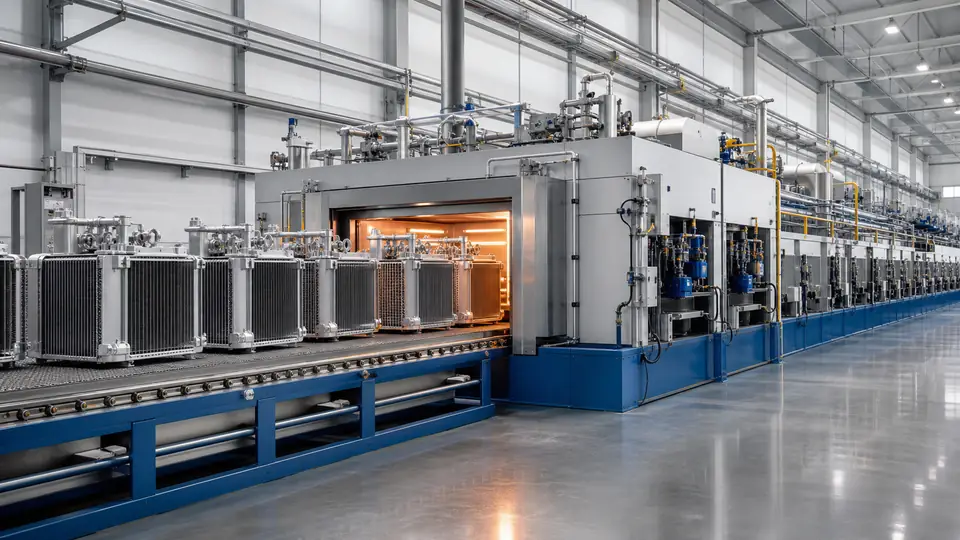
The cooling stage belongs in an aluminum brazing process review, even when most production attention is focused on peak temperature. An assembly's complete thermal history and the conditions under which it is supported, handled and measured matter when investigating dimensional variation. Do not treat a satisfactory peak reading as the only evidence needed for process acceptance.
REVIEW THE FULL PROFILE
Identify the measured heating, brazing and cooling portions of the qualified cycle. State where measurements were taken on the representative assembly and how the profile relates to production loading. A recorded cooling rate describes the measured location and test conditions; it should not be generalized to every product configuration without review.
CONNECT FIXTURES TO THE INVESTIGATION
Record the fixture revision, contact arrangement and loading pattern used for the affected product. Inspect the fixture according to its maintenance plan. Compare dimensional results against changes in these conditions rather than assuming that every deviation comes from one furnace setting. The approved process should define any restrictions on fixture substitution or product support.
STANDARDIZE POST-PROCESS MEASUREMENT
Define the measurement method, reference features and required condition of the assembly. Record whether inspections are performed at the specified measurement temperature and after the required stabilization period. Differences in handling or measurement setup can complicate comparisons between production shifts or between supplier and customer results.
TEST CHANGES THROUGH A CONTROLLED PLAN
If a process adjustment is proposed, identify the expected effect and the acceptance evidence before the trial. Consider both dimensional requirements and the other characteristics that the change could influence. Record trial material separately until the authorized review is complete. Avoid changing several unrelated settings without a plan for interpreting the result.
FREQUENT QUESTION: IS FASTER COOLING ALWAYS THE BEST SOLUTION?
No universal cooling strategy applies to every assembly. Product design, materials, process requirements and equipment capability must be considered together. A successful result on one configuration does not automatically qualify another.
SUPPLIER DISCUSSION CHECKLIST
Request the approved profile, fixture identification, dimensional inspection method and change-control record. These documents make it easier to discuss the complete process instead of debating one isolated temperature value.