Aluminum Brazing Process Window: How Temperature, Time, and Joint Gap Work Together
Stable brazing comes from the combined window of materials, assembly, flux, and thermal processes.
Jinglian Zhongrui Technology Team
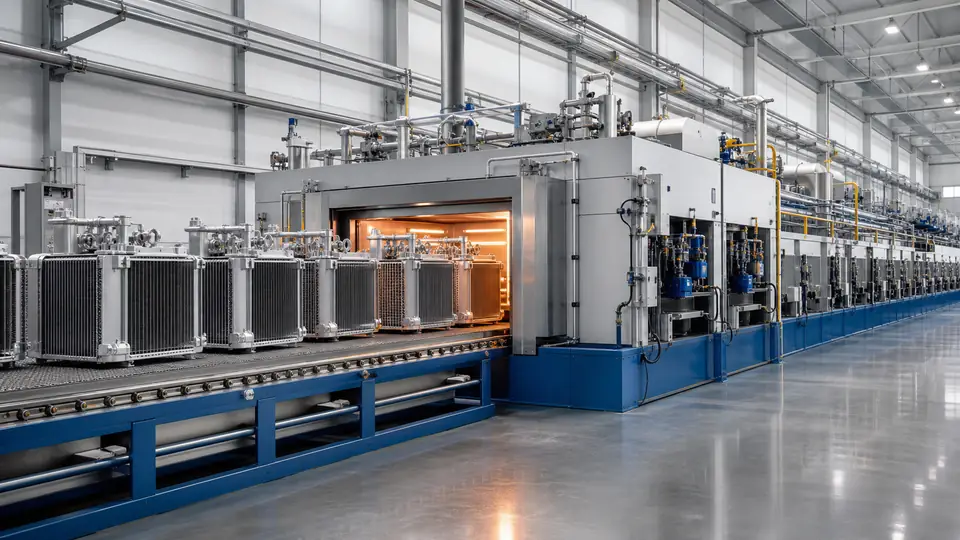
Core Points Continuous aluminum brazing is not controlled by a single peak temperature. Heating rate, liquid phase dwell time, joint gap, surface condition, and cooling process all affect wetting and joint integrity. Implementation Focus 1. Establish the experimental matrix after fixing the base material, filler metal, and flux system. 2. Record the heating rate, peak temperature, and high-temperature dwell time at different positions of the product separately. 3. Manage joint gaps and assembly constraints as key manufacturing characteristics. 4. Use appearance, leak test, metallography, and strength results to back-calculate the stable window. Verification and Feedback Loop The qualified window should come from data across multiple batches and load positions, not a single ideal sample. Project Recommendations During design reviews, input conditions, target values, verification methods, and responsible persons should be documented in the same traceable file; when changes occur, simultaneously assess the impact on design, manufacturing, and delivery.Doing this can transform experience into stable and replicable engineering capability. Further reading: Solvay NOCOLOK Technical Center: https://www.solvay.com/en/brands/nocolok/technical-center Solvay NOCOLOK Technical Data: https://www.solvay.com/en/brands/nocolok/publications