Brazing Furnace Interruptions: Identify and Hold Affected Product
Build a product-hold and review plan for interrupted brazing cycles without assuming that restarting equipment also releases the material.
China Thermic Editorial Team
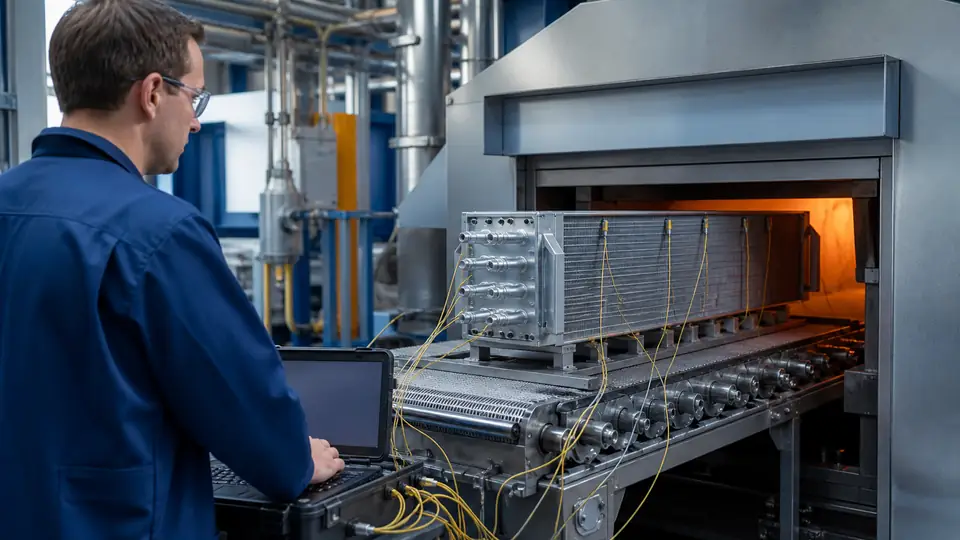
An interrupted brazing cycle creates two separate decisions: how authorized personnel restore the equipment and how quality personnel assess affected product. Restarting a furnace does not automatically demonstrate that assemblies inside it received an acceptable cycle. Define product identification and disposition responsibilities before an interruption occurs.
ESTABLISH THE AFFECTED TIME WINDOW
Record the event time, equipment state and available process history. Identify the loads that may have been within the relevant furnace sections or approaching them. Use actual tracking records where available. If the boundary is uncertain, the hold decision should reflect that uncertainty rather than excluding material solely to reduce the quantity under review.
PROTECT PRODUCT IDENTITY
Keep affected assemblies separate from released product and preserve their original production identities. Link each held batch to the event record. Avoid creating a new batch number that hides the earlier processing history. The hold record should show the responsible reviewer and what evidence is still needed before a disposition can be made.
REVIEW THE AVAILABLE PROCESS EVIDENCE
Compare recorded conditions with the qualified process requirements. Consider which measurements are available and which parts of the product history remain unknown. A furnace setpoint alone is not a complete temperature history of the assembly. Determine any additional inspection or evaluation through the approved quality procedure and responsible technical personnel.
DO NOT ASSUME REPROCESSING IS ACCEPTABLE
A second pass through the furnace is a process change that may not be suitable for the product. Reprocessing, repair, rejection or another disposition requires the appropriate technical authorization. This planning guide does not provide furnace restart instructions or permission to override equipment interlocks. Equipment recovery must follow the manufacturer's safety and operating requirements.
FREQUENT QUESTION: CAN VISUAL INSPECTION RELEASE EVERY INTERRUPTED LOAD?
Only if the approved acceptance basis establishes that the required evidence is sufficient. Appearance alone should not be substituted for other specified performance or integrity requirements.
PREPARE BEFORE PRODUCTION
Agree the event log format, batch-location method, hold area and decision authority during process planning. A clear interruption procedure helps the team preserve evidence while keeping equipment recovery separate from product release.