Brazing Line OEE: Measure Good Output, Not Just Belt Speed
Use availability, performance and first-pass quality together to understand brazing-line losses and prioritize production improvements.
China Thermic Editorial Team
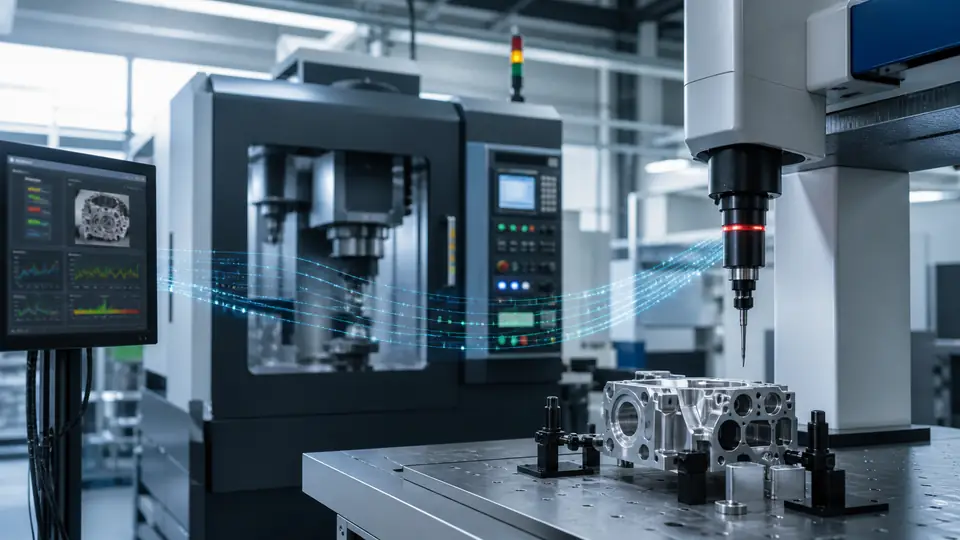
Overall equipment effectiveness, or OEE, is useful when its inputs are consistently defined. For a brazing line, a faster belt is not a complete improvement if it produces more rework or shifts the bottleneck to inspection. Start with good output and trace the losses that prevent it.
DEFINE THE MEASUREMENT BOUNDARY
State whether the calculation covers the furnace alone or the complete production line. Define planned production time, the reference production rate and what qualifies as a good unit. Keep product-family differences visible, since a large assembly and a small assembly may not share a valid reference rate.
WORKED EXAMPLE
Suppose a line has availability of 90%, performance of 80% and a quality ratio of 95% under a consistent definition. OEE is 0.90 x 0.80 x 0.95 = 0.684, or 68.4%. This is an illustrative calculation, not a reported China Thermic production result or an industry benchmark.
MAKE LOSSES ACTIONABLE
Separate equipment stops, waiting for material, changeovers, reduced rate and quality losses. Record the reason and duration close to the event. Avoid combining every interruption into one miscellaneous category. Compare the largest recurring losses with the effort required to address them, then choose a manageable improvement trial.
KEEP QUALITY VISIBLE
Define how reworked units are counted. Report first-pass yield alongside total accepted output so repeated processing does not hide instability. Check whether inspection results can be linked to the production interval that created the product.
FREQUENT QUESTION: WHAT OEE TARGET SHOULD A NEW LINE USE?
Begin with a reliable baseline and consistent definitions. A target copied from another plant may use different product mix, downtime rules and process boundaries.
TECHNICAL REFERENCE
NIST discusses performance measurement for manufacturing systems. The worked example and review sequence above are explanatory tools. https://www.nist.gov/programs-projects/operations-driven-performance-measurement-smart-manufacturing-systems