CAB Brazing Material Selection: Check Aluminum Alloy and Flux Compatibility
Review alloy composition, clad construction and flux compatibility together before approving an aluminum material substitution for CAB brazing.
China Thermic Editorial Team
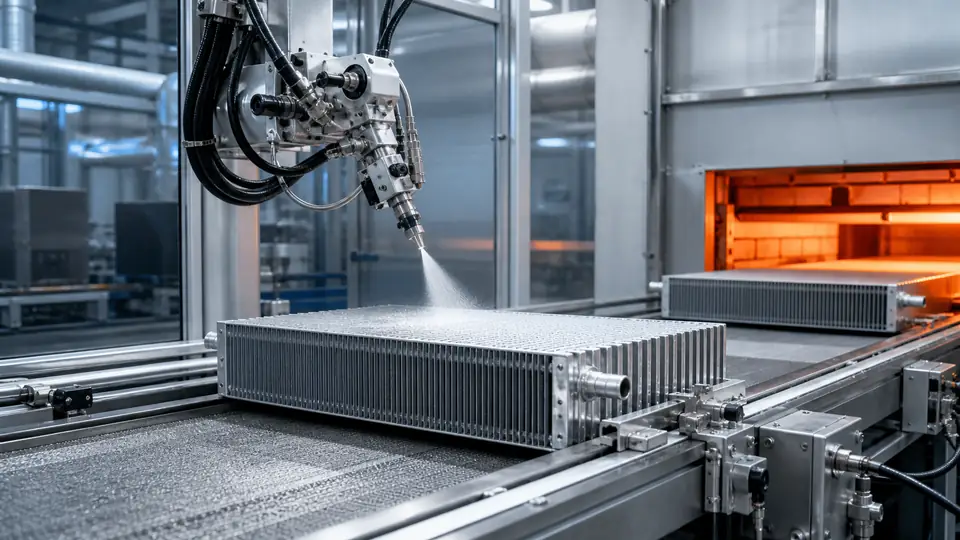
An aluminum material substitution for controlled-atmosphere brazing should include a review of the alloy, clad construction and flux system. Matching a drawing dimension or nominal strength does not demonstrate that the replacement will follow the qualified joining process.
BUILD A MATERIAL COMBINATION RECORD
List the materials on both sides of each critical joint, their specified composition, cladding details and any separately supplied filler. Include the flux product and application method. Keep the record tied to the part revision so purchasing, process engineering and incoming inspection refer to the same approved combination.
Solvay offers flux products intended to improve compatibility with higher-magnesium aluminum alloys. That product distinction shows why flux selection needs the actual material information. It should not be interpreted as a universal magnesium allowance or permission to substitute one flux for another without qualification.
ASK WHAT THE SUPPLIER HAS CHANGED
A replacement may differ in composition range, clad alloy, clad thickness or surface condition even when its commercial description looks familiar. Ask for the applicable material documentation and identify the differences explicitly. Mark missing information as an open item instead of assuming it matches the current supply.
Use a comparison sheet with three decisions for each difference: acceptable with existing evidence, requiring additional trial evidence, or unsuitable for the proposed process. Assign each decision to the responsible engineering reviewer. This makes the review useful when several candidate suppliers are being considered.
DESIGN A REPRESENTATIVE COMPATIBILITY TRIAL
Use the proposed material combination and the intended preparation route. Define the sample arrangement and acceptance criteria before the trial. Include a qualified baseline where practical, and retain material identities, flux details and process records with the results.
A simple sample can help compare joining behavior, but the production release should explain how that evidence represents the actual assembly. Review critical joint locations and the product's functional requirements rather than assuming that one successful coupon covers every configuration.
FREQUENT QUESTION: CAN A STRONGER ALUMINUM ALLOY BE SUBSTITUTED DIRECTLY?
No direct substitution should be assumed. Review joining compatibility and the properties required after the complete manufacturing route, as well as the supplier's incoming material specification.
DECISION CHECKLIST
Confirm both joint materials, clad details, filler source, flux compatibility guidance, representative trial evidence and the approved supplier record before release.
SOURCE
Solvay, NOCOLOK Flux Powders: product-specific compatibility information. https://www.solvay.com/en/brands/nocolok/flux-powders