Before CAB Brazing: Cleaning, Drying and Work-in-Process Control
Control contamination and storage between cleaning, fluxing and brazing with a practical work-in-process checklist for aluminum assemblies.
China Thermic Editorial Team
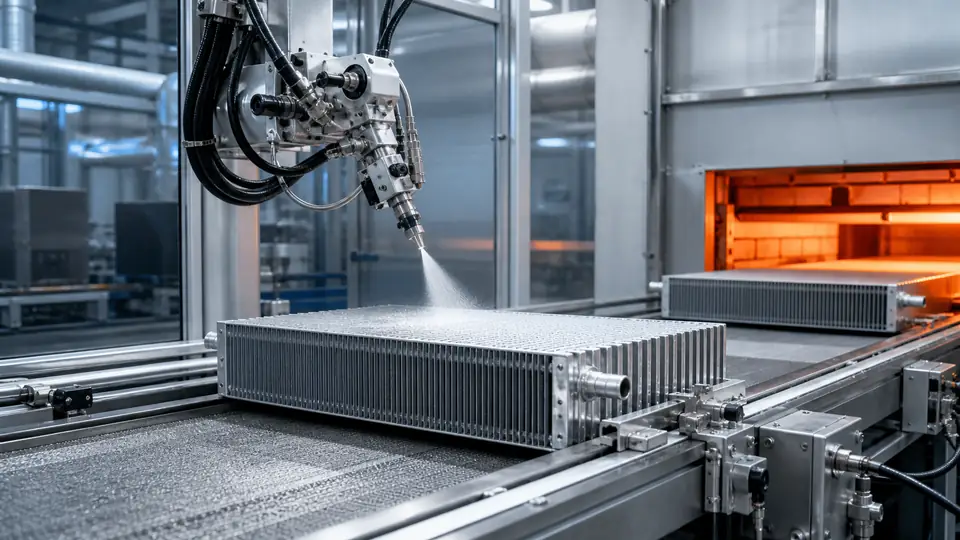
Repeatable controlled-atmosphere brazing begins before an assembly enters the furnace. Cleaning, drying, handling and storage should be treated as connected process steps. A good furnace recipe cannot compensate for an uncontrolled preparation route.
MAP HOW CONTAMINATION CAN ENTER
Review forming lubricants, handling residues, wash chemistry, rinse condition and contact with racks or gloves. Identify which residues the approved cleaning method is intended to remove. Avoid assuming that a visually clean surface proves suitability for brazing; appearance is only one check.
VERIFY DRYING UNDER PRODUCTION CONDITIONS
Assess the heaviest assembly, shielded areas and any geometry that can retain liquid. Record loading arrangement and drying conditions used during qualification. Do not apply a fixed drying time to a different product without evidence that it remains effective. Any process adjustment should follow the chemical and equipment suppliers' instructions.
CONTROL THE WAIT BETWEEN OPERATIONS
Define where prepared assemblies can be stored, how they are protected and how their processing status is identified. Establish a qualified holding period appropriate to the materials and environment rather than adopting an arbitrary universal limit. Record interruptions so a delayed batch can be reviewed before it enters the furnace.
USE A SIMPLE RELEASE CHECKLIST
Confirm the assembly identity, preparation route, drying completion, fluxing status where applicable and the approved handling method. Keep suspect or interrupted batches clearly separated. If joint defects appear after a storage or cleaning change, compare preparation records alongside the thermal profile and atmosphere data.
FREQUENT QUESTION: SHOULD MORE FLUX BE USED TO OFFSET POOR CLEANING?
Do not treat extra flux as a substitute for an approved preparation process. Investigate the contamination source and confirm the appropriate corrective action through trials.
TECHNICAL REFERENCE
The NOCOLOK technical center provides background on aluminum flux brazing. Product-specific preparation conditions still require validation. https://www.solvay.com/en/brands/nocolok/technical-center