CAB Furnace Loading Patterns: Qualifying Throughput Changes
Increase brazing-line throughput with evidence: qualify loading density, product orientation and thermal response before releasing a new pattern.
China Thermic Editorial Team
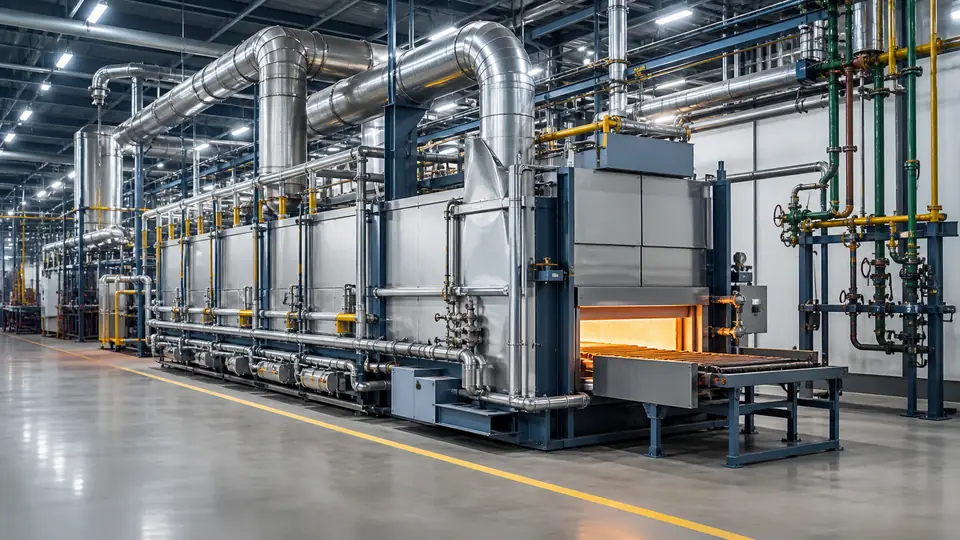
A higher belt loading density is a process change, even when the furnace temperature settings remain unchanged. Before increasing throughput, demonstrate that the new pattern preserves the product's qualified thermal cycle and the required joint quality.
DESCRIBE THE BASELINE
Record part orientation, spacing, number of rows, fixture arrangement, belt speed and representative product mix. Photograph the approved loading pattern and link it to the recipe. Without a clear baseline, operators may interpret the same production instruction differently between shifts.
IDENTIFY WHAT THE CHANGE AFFECTS
Additional mass and closer spacing can change the way assemblies heat. Different product sizes can introduce variation across a load. Review the proposed change together with the available furnace capacity and atmosphere-control approach. Do not assume that the displayed zone temperatures prove every product has followed the same cycle.
DESIGN THE COMPARISON
Measure product temperature at locations selected to capture likely variation. Include relevant positions across the belt and within an assembly. Compare the existing and proposed patterns with the same measurement method. Assess joint quality and product dimensions after cooling, and record any rejects or rework during the trial.
RELEASE A PRACTICAL OPERATING WINDOW
The output should be a defined loading instruction, not simply permission to put more parts on the belt. Specify the approved pattern, product families, recipe revision and checks following a changeover. Define how an unexpected gap, mixed batch or production interruption is handled using the equipment's approved operating procedures.
FREQUENT QUESTION: CAN BELT SPEED BE INCREASED AFTER ADDING MORE HEAT?
Only after a process review and validation. Throughput, actual product temperature and joint formation must be evaluated together; there is no generally valid speed increase.
TECHNICAL REFERENCE
Solvay identifies temperature-profile control as important to successful heat-exchanger brazing. The qualification sequence here translates that principle into a production-change checklist. https://www.solvay.com/en/brands/nocolok/technical-center