Compressed Air in Heat Exchanger Production: Build an Energy Baseline
Separate productive compressed-air demand from leaks and idle consumption, then verify savings against comparable production conditions.
China Thermic Editorial Team
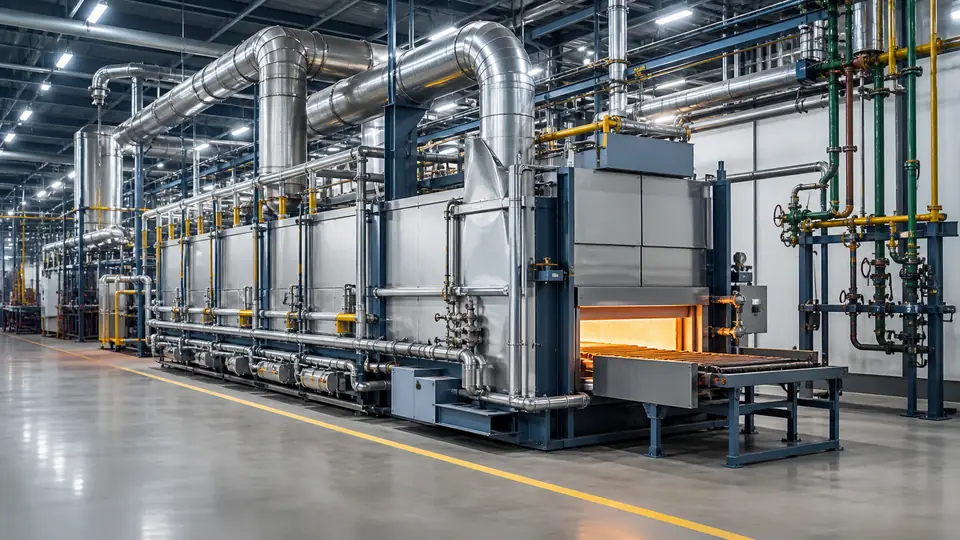
Compressed-air improvement should begin with a measured baseline for the production area. A lower compressor power reading is useful only if the same required work is being completed with acceptable pressure and air quality. Compare production demand, idle demand and supply behavior before choosing an upgrade.
DEFINE THE SYSTEM BOUNDARY
Identify which cleaning stations, pneumatic tools, fixtures and controls share the supply. Distinguish compressed air from process gases such as nitrogen; they have different purposes and must not be treated as interchangeable utilities. Record the required operating pressure and air-quality requirements at each critical point using the equipment documentation.
The US Department of Energy recommends a system approach that considers both demand and supply, including inappropriate uses, leaks, storage and controls: https://betterbuildingssolutioncenter.energy.gov/better-plants/compressed-air
MEASURE A REPRESENTATIVE PERIOD
Collect compressor energy, operating state, pressure and available flow data alongside production quantity and product mix. Include a planned nonproduction period if it can be observed safely. Note equipment that remains intentionally active, such as approved utility or control functions, so every idle-period flow is not automatically labelled a leak.
If shared metering prevents attribution to one line, state that limitation. Do not present a plant-wide improvement as the measured saving from one radiator assembly station.
TURN A SURVEY INTO CLOSED ACTIONS
Give each confirmed leak or unnecessary use an equipment location, action owner and completion record. Maintenance work must follow the site's isolation procedures and the equipment supplier's instructions. Prioritize items using observed impact, access requirements and the planned maintenance window.
After repair, verify the affected condition again. Keep unresolved findings visible; a list of detected leaks does not show that demand has fallen.
VERIFY THE RESULT
Compare periods with similar production, pressure settings and operating hours. Explain changes in compressor sequencing or other major users. Report energy and production together, and retain any observed effects on process performance. Treat a proposed pressure reduction as an engineering change that must preserve the requirements of connected equipment.
FAQ: SHOULD A LARGER COMPRESSOR BE THE FIRST PURCHASE?
Not automatically. Review demand, restrictions, leaks and controls first. Additional supply capacity may be appropriate, but the measured system behavior should support the decision.
STARTING DELIVERABLE
Prepare a utility map, baseline trend, confirmed action list and a dated follow-up comparison. These make the investment discussion specific and reviewable.