Energy saving in continuous brazing furnace: achieve thermal balance first, then discuss parameter optimization
Energy saving should be carried out without sacrificing atmosphere, temperature uniformity, and productivity.
Jinglian Zhongrui Technology Team
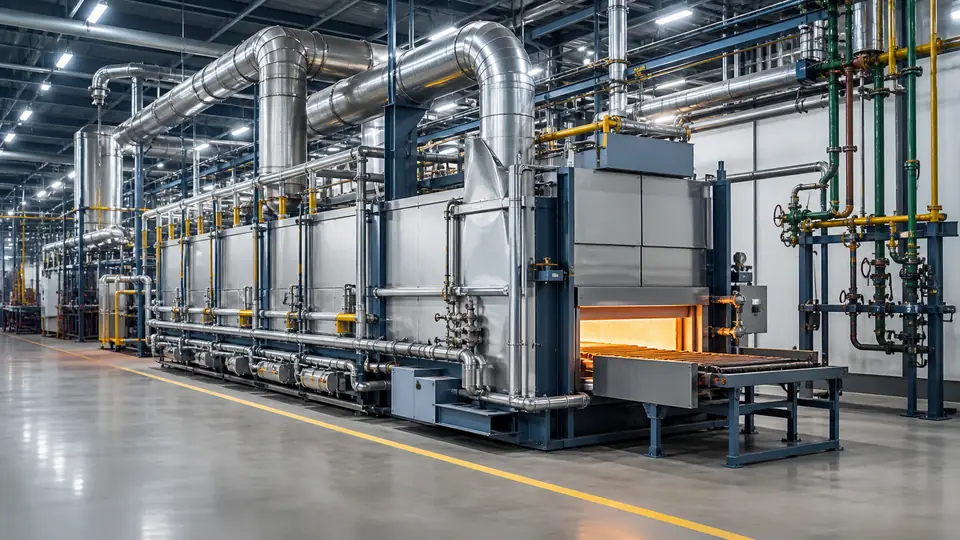
Core Points The energy consumption of the process heating system comes from multiple parts, including product heat absorption, furnace losses, exhaust, cooling, and standby. Establishing the energy boundary first is necessary to determine whether retrofit opportunities are real. Key Implementation Steps 1. Record energy baselines separately for production, changeover, standby, and shutdown. 2. Check furnace insulation, thermal bridges, door area heat loss, and exhaust volume. 3. Optimize chain speed, load rate, circulating air, and protective gas consumption together. 4. Evaluate improvements based on energy consumption per qualified product, not just instant power comparison. Verification and Closed Loop After improvement, simultaneously review temperature curves, atmosphere, defect rates, and production capacity to avoid energy savings turning into quality costs. Project Recommendations During the proposal review, input conditions, target values, verification methods, and responsible personnel should be recorded in the same traceable document.Synchronize the assessment of design, manufacturing, and delivery impacts when changes occur. Doing so allows experience to be transformed into stable, repeatable engineering capability. References: U.S. Department of Energy Process Heating Systems: https://www.energy.gov/cmei/ito/process-heating-systems U.S. Department of Energy Finding Efficiencies in Process Heat: https://www.energy.gov/cmei/ito/finding-efficiencies-process-heat