Oversized radiator selection: first define the heat load and operating conditions boundaries
Overloading a project is not about making the core larger, but first clearly defining the environment, medium, air volume, and heat load.
Jinglian Zhongrui Technology Team
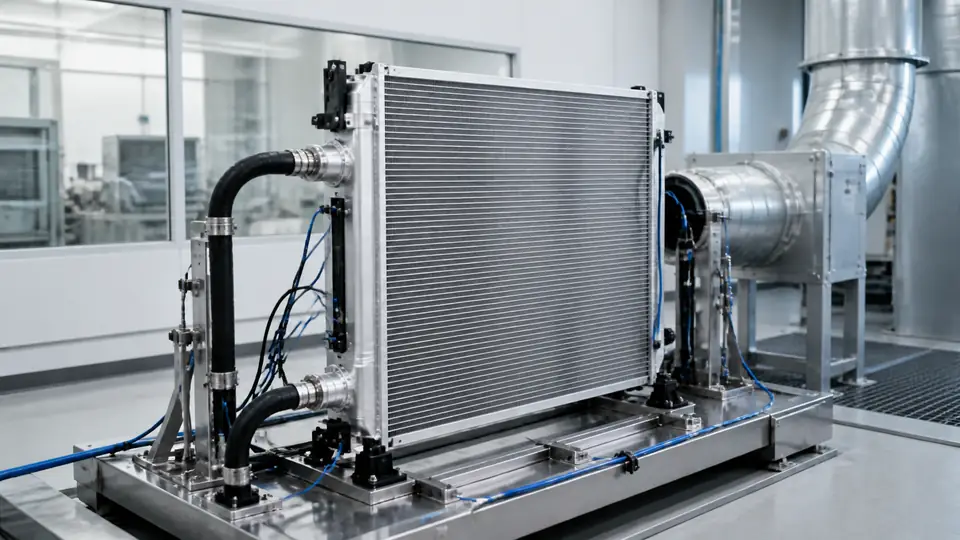
Key Points The starting point for selecting a radiator is the operational boundary, not the catalog model. Only by writing the most unfavorable operating conditions as verifiable criteria can the structural dimensions, materials, and air-side plan have a common basis.
Implementation Focus 1. Record continuous and peak heat loads, distinguishing between steady-state and transient tasks. 2. Specify ambient temperature, altitude, dust, installation space, and inlet/outlet air restrictions. 3. Lock in coolant formulation, flow range, allowable pressure drop, and interface conditions. 4. Establish a verification plan for prototype thermal balance, pressure resistance, vibration, and contamination margins.
Verification and Feedback During reviews, it should be possible to trace each design parameter back to the input operating conditions and reproduce the most unfavorable combination on the test bench.
Project Recommendations During scheme review, input conditions, target values, verification methods, and responsible personnel should be recorded in the same traceable document.Synchronize the evaluation of design, manufacturing, and delivery impacts when changes occur. Doing so can transform experience into stable and reproducible engineering capabilities.