Radiator Sizing for High Altitude and Hot Ambient Conditions
Specify altitude, inlet-air temperature and operating duty together when reviewing radiator capacity for demanding installation environments.
China Thermic Editorial Team
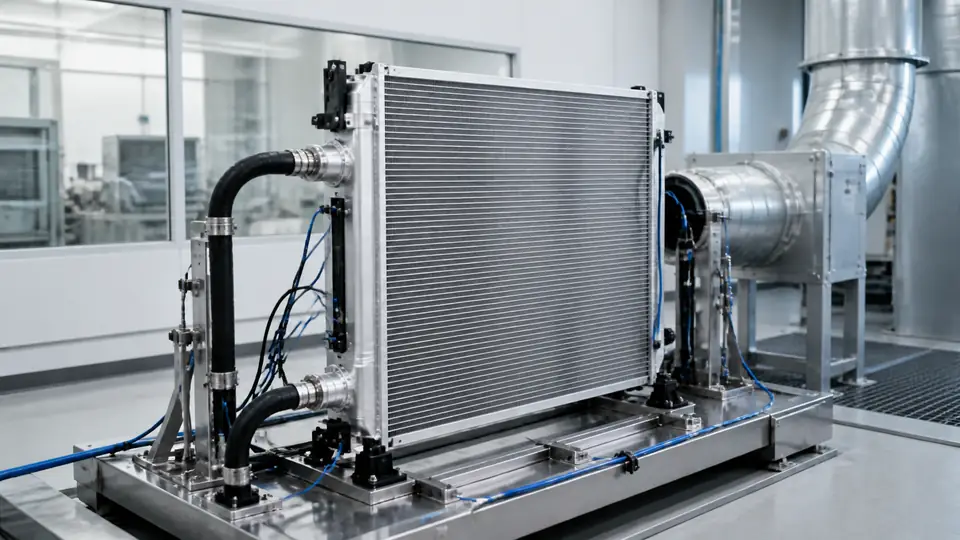
Radiator selection for a high-altitude or hot-climate installation should begin with the actual air conditions at the core. A cooling rating obtained at one elevation and ambient temperature cannot automatically be transferred to another installation.
SEPARATE THE TWO EFFECTS
At higher altitude, lower air density changes the mass of air moved for a given volumetric flow. Hotter inlet air also reduces the temperature difference available to reject heat from the coolant. These effects interact with the fan operating point, so a single universal derating percentage is not a reliable design rule.
DEFINE THE DUTY BEFORE REQUESTING A QUOTATION
Provide the installation elevation, expected ambient range, permissible coolant temperatures, coolant composition and flow, and heat rejection at the relevant machine loads. State whether the equipment runs continuously, intermittently or with short peak loads. Include heat added to the inlet air by other components in a stacked cooling package.
Do not substitute engine power or electrical output directly for coolant heat rejection. Use the heat-balance information for the specific machine. Where information is uncertain, identify the uncertainty explicitly so the engineering review can evaluate it instead of hiding it inside an unexplained safety factor.
REVIEW THE COMPLETE COOLING PACKAGE
Check available face area, core depth, grille restriction, fan capability, shroud arrangement and discharge space. Increasing core depth can raise airflow resistance; it does not guarantee proportional improvement in installed cooling. Compare feasible configurations at the required operating point rather than comparing nominal core size alone.
AGREE ON ACCEPTANCE CONDITIONS
Define the ambient condition, elevation or air-density basis, coolant limit, duty duration and stabilization criterion used for acceptance. If a test cannot reproduce the final environment, document the correction method and its limitations before testing.
FREQUENT QUESTION: IS A SEA-LEVEL TEST USELESS?
No. It can provide valuable baseline data, but the method used to relate that data to the final installation must be agreed and technically justified. Keep measured results separate from predicted performance.