Coolant and Material Compatibility: Key Points for Controlling Radiator Corrosion Risk
The materials, coolant, water quality, and electrochemical environment together determine the radiator's lifespan.
Jinglian Zhongrui Technology Team
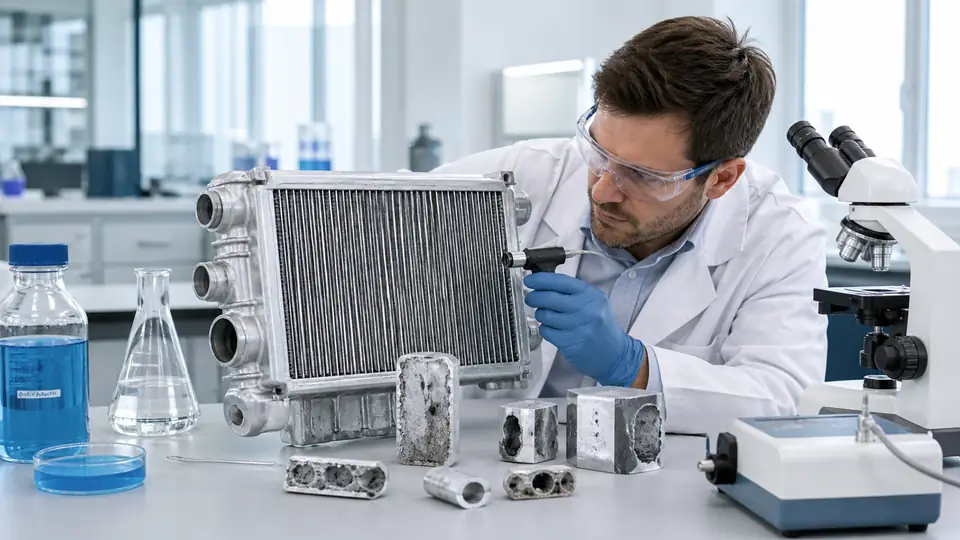
Key Points Corrosion control of aluminum alloy radiators cannot rely solely on a single material grade. The medium formulation, dissimilar metal connections, stray currents, and maintenance top-up all affect long-term risk. Implementation Focus 1. Confirm the type, concentration, pH, and makeup water requirements of the coolant. 2. Identify dissimilar metal combinations such as aluminum, copper, and steel and their galvanic corrosion paths. 3. Control brazing residues, cleanliness, and sealant material compatibility. 4. Evaluate long-term changes through soaking, circulation, and combined pressure and temperature tests. Verification and Closed-Loop Project documentation should record medium specifications and maintenance windows to avoid the use of incompatible coolants on site. Project Recommendations During scheme review, input conditions, target values, verification methods, and responsible personnel should be recorded in the same traceable document; any changes should simultaneously assess impacts on design, manufacturing, and delivery.Doing this can turn experience into stable, replicable engineering capability.