In dusty working conditions, how does a radiator reduce clogging and performance degradation
The heat dissipation design of mining, agricultural, and construction machinery needs to take dust adhesion and cleaning maintenance into account in advance.
Jinglian Zhongrui Technology Team
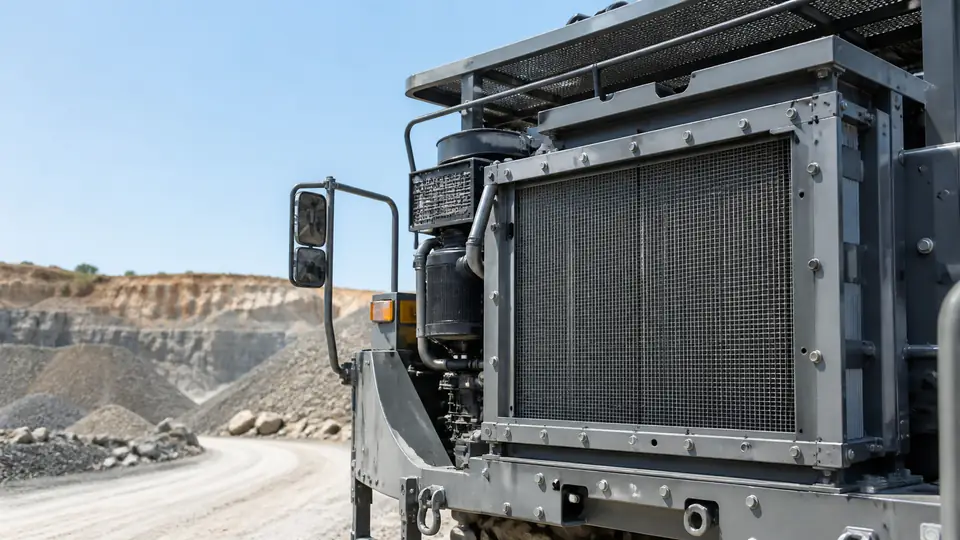
Core Points Performance degradation in dusty environments often results from the combined effects of fin spacing, airflow organization, and maintenance accessibility. Anti-clogging design should be based on real particle characteristics and cleaning cycles. Implementation Focus 1. Choose fin type and spacing based on particle size and adhesion characteristics. 2. Reduce recirculation zones and local low-velocity areas to prevent long-term dust accumulation. 3. Reserve space for back-blowing, washing, or disassembly to protect fins from misuse. 4. Evaluate proposals based on airflow resistance and heat exchange changes before and after contamination, rather than only visual inspection. Verification and Closed-Loop It is recommended to conduct comparative tests using a repeatable dust-loading procedure and record the performance recovery rate after cleaning. Project Recommendations During proposal review, input conditions, target values, verification methods, and responsible personnel should be recorded in a single traceable document.Synchronize the assessment of design, manufacturing, and delivery impacts when changes occur. Doing so can turn experience into stable, repeatable engineering capabilities.