Heat dissipation efficiency and pressure loss, how to find the system balance point
Heat transfer capacity, air resistance, and liquid resistance must be jointly optimized as a single system problem.
Jinglian Zhongrui Technology Team
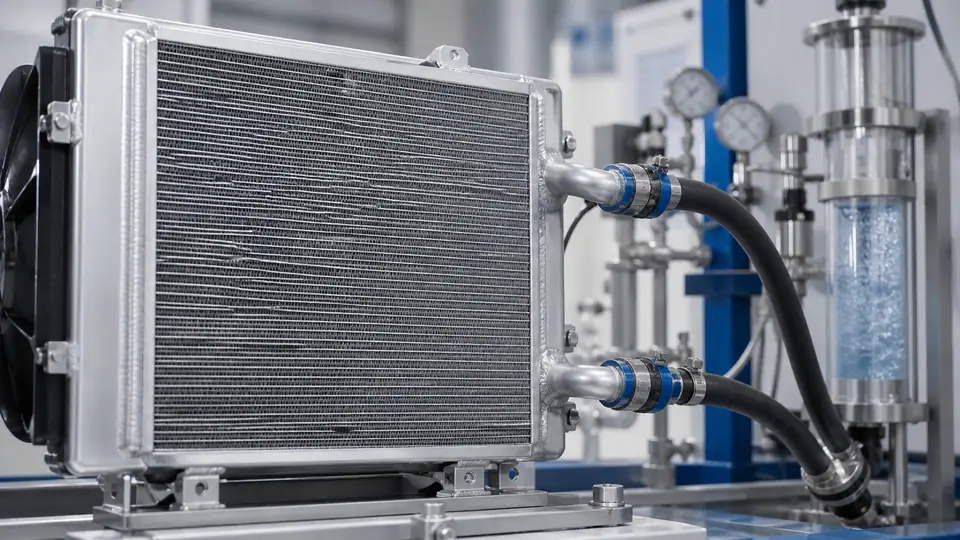
Core Points Simply pursuing denser fins or higher flow rates may simultaneously increase the load on fans and pumps. Excellent designs should retain reasonable pressure drops and anti-clogging margins under the target thermal load.
Implementation Focus 1. Calculate effective airflow based on the entire machine ducting rather than isolated cores. 2. Compare air-side resistance, liquid-side pressure drop, and heat exchange simultaneously. 3. Plot performance curves at multiple flow points, avoiding relying on a single-point result. 4. Include fan and pump power consumption and noise in the final solution evaluation.
Verification and Closed-Loop Re-measure samples using the same set of instruments and boundary conditions to confirm heat balance and measurement uncertainty.
Project Recommendations During scheme review, input conditions, target values, verification methods, and responsible persons should be recorded in a single traceable document; if changes occur, simultaneously evaluate the impact on design, manufacturing, and delivery.Doing this can turn experience into stable, replicable engineering capability.