Radiator Mounting Design: Allowing for Thermal Expansion
Define radiator supports, hose loads and thermal movement together so the installed assembly is not constrained by its surrounding structure.
China Thermic Editorial Team
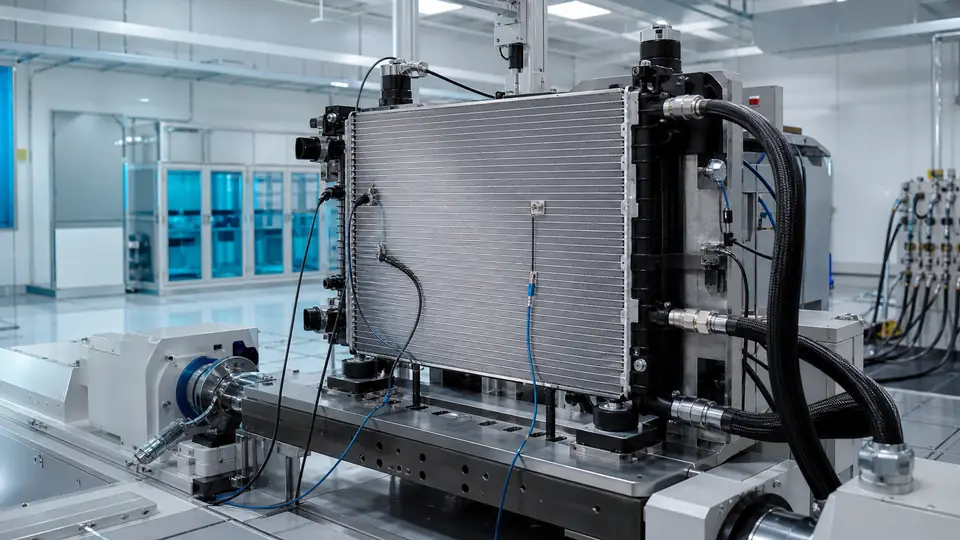
Radiator mounting design should account for temperature-related movement as well as the weight of the assembly. A radiator that fits correctly when cold may experience different interface loads when its frame, core and surrounding equipment reach operating temperature. Treat the mounting arrangement as part of the cooling-system design, not simply a fabrication detail.
DEFINE THE INSTALLATION BOUNDARY
Identify which structure supports the radiator and which components move with it. Record the orientation, support locations, connection positions and permitted movement at each interface. Include guards, shrouds and attached coolers when describing the installed assembly. Their brackets can unintentionally create an additional constraint that is absent from the radiator drawing.
SEPARATE SUPPORT FROM CONNECTION LOADS
The cooling assembly needs defined load paths. Hoses and pipes should not be assumed to hold a radiator in position, and their connections should not be used to pull a misaligned installation into place. Ask the equipment designer to evaluate connection reactions and the flexibility required for the actual routing. Select fastening and isolation details through the approved design process.
REVIEW THE HOT CONDITION
Compare the expected temperature ranges of the radiator and supporting frame. Where their movement differs, the design review should explain how that difference is accommodated. Avoid prescribing a universal slot size or mount stiffness without knowing the assembly geometry, materials and service loads. A small installation change can alter the behavior of a previously validated support system.
VALIDATE THE COMPLETE ASSEMBLY
Inspection should include cold fit-up and the relevant operating or durability conditions. Record changes in clearances, evidence of contact, fastener condition and connection alignment. Use the agreed test procedure and acceptance limits. If a support or pipe route changes during commissioning, update the installation record and assess whether additional validation is necessary.
FREQUENT QUESTION: CAN A FLEXIBLE HOSE SOLVE EVERY MOUNTING PROBLEM?
No. Hose flexibility addresses only part of the interface. Its routing, temperature capability and allowable movement still need review, while the radiator itself requires a suitable support arrangement.
PROJECT CHECKLIST
Prepare the installation drawing, support load assumptions, connection requirements and thermal movement review together. Assign responsibility for the radiator, frame and connected pipework before releasing manufacturing drawings.