Variable-Speed Radiator Fans: Coordinate Control with the Thermostat
Plan temperature sensing, fan commands and thermostat interaction together when specifying variable-speed control for an industrial radiator.
China Thermic Editorial Team
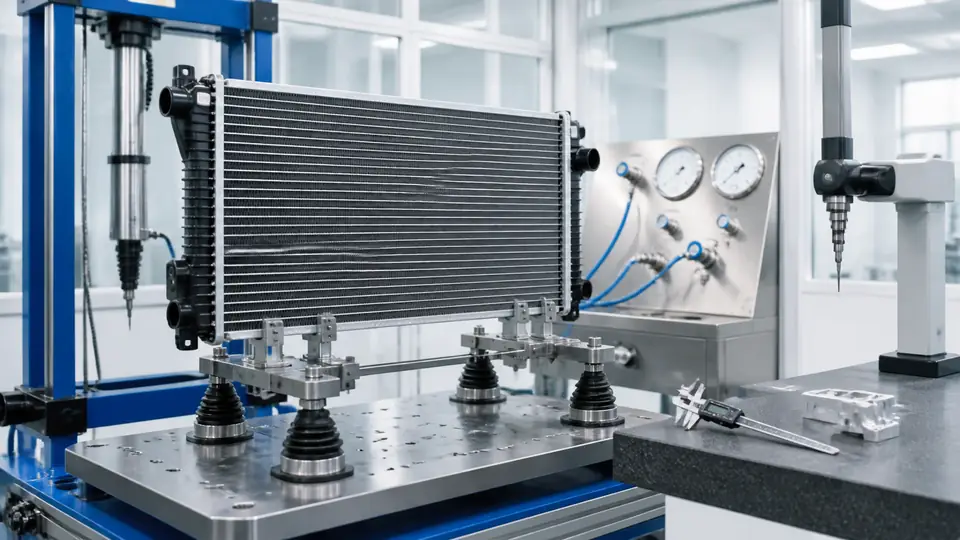
Variable-speed radiator fan control should be reviewed together with the coolant thermostat and machine operating requirements. A fan-speed schedule is not complete until the team has defined the measured temperature, allowed operating range and response to changing load.
DEFINE WHAT THE CONTROLLER SEES
Identify each temperature sensor by location and purpose. Coolant leaving a machine, coolant returning from the radiator and air entering the core are different signals. Record which signal commands the fan and which signals provide monitoring or protection. Use the approved equipment limits when assigning their roles.
Cummins' gas-power-plant application manual notes that variable-frequency fan control can interact with cooling-circuit thermostat logic. That observation is a reason to evaluate the controls together, rather than assuming that an independently selected fan controller will suit every installation.
DESCRIBE THE OPERATING SEQUENCE
Write the intended behavior for startup, a gradual load increase, a rapid load change and a return to low load. State the permitted fan operating range and the conditions under which the machine's own protective response applies. Any response to a failed sensor or lost command should come from the approved equipment design.
Assign an owner to each control function. Where a radiator supplier provides the fan panel and another party supplies the machine controller, agree on signal units, command direction and status feedback before connecting the systems. A readable interface schedule prevents ambiguity during commissioning.
VALIDATE THE RESPONSE, NOT JUST ONE TEMPERATURE
Log relevant temperatures, machine load, fan command and actual fan speed using a shared time reference. Where thermostat behavior can be observed through approved instrumentation, include that evidence. Review repeated acceleration and deceleration, delayed recovery and unexplained temperature changes with the responsible controls engineer.
Compare trials under repeatable conditions and retain the final controller settings with the equipment revision. A stable result during one constant load does not demonstrate every permitted operating transition. Include the transitions that matter to the application in the acceptance plan.
FREQUENT QUESTION: SHOULD THE FAN RUN AT MAXIMUM SPEED CONTINUOUSLY?
The answer depends on the approved cooling and operating requirements. Continuous maximum speed may be an appropriate condition for some duties, but it is not a substitute for defining how a variable-speed system should behave.
DECISION CHECKLIST
Confirm sensor locations, thermostat coordination, control ownership, permitted speed range, transition tests and retained settings before approving the system.
SOURCE
Cummins, Gas Power Plant Application Manual, airflow and fan-control considerations. https://www.cummins.com/sites/default/files/2024-08/t035-Gas-Power-Plant-application-manual.pdf